---
title: "Key Concepts"
description: "Understanding the foundations of time series forecasting with TimeGPT"
icon: "lightbulb"
---
These key concepts cover the foundations of time series data, how forecasts
are generated, and the role of TimeGPT in predicting future values and
detecting anomalies.
Use these concepts as a reference to better understand how TimeGPT simplifies
tasks such as demand forecasting, anomaly detection, and multi-series
forecasting.
A sequence of numerical data points arranged in chronological order.
Predicting future values by analyzing historical data and patterns.
Identifying unusual or unexpected events that deviate from typical behavior.
Managing and forecasting multiple time series data at once.
Nixtla's generative pre-trained model for time series forecasting.
Segments of historical data that inform TimeGPT's forecasting process.
## Time Series
A time series is a sequence of numerical data points arranged in chronological order. In the context of TimeGPT, each data point in the series serves as input to the model. The model learns from patterns in the data and uses this understanding to forecast future values. Time series data appear in various domains, such as stock prices, weather recordings, and sales figures.
## Forecasting
Forecasting is a method used in many fields—such as business and environmental studies—to predict future outcomes based on historical information. It involves analyzing past data to detect patterns, trends, or recurring behaviors and extending these insights into the future.
One significant advancement in forecasting is the application of modern
machine-learning methods, including deep learning. Models like TimeGPT can
handle large datasets and identify complex patterns with enhanced prediction
accuracy.
For example, a retailer might analyze past sales to forecast product demand, while an economist uses historical data to anticipate future economic conditions. TimeGPT makes these advanced capabilities accessible even to users without in-depth machine-learning expertise.
## Anomaly Detection
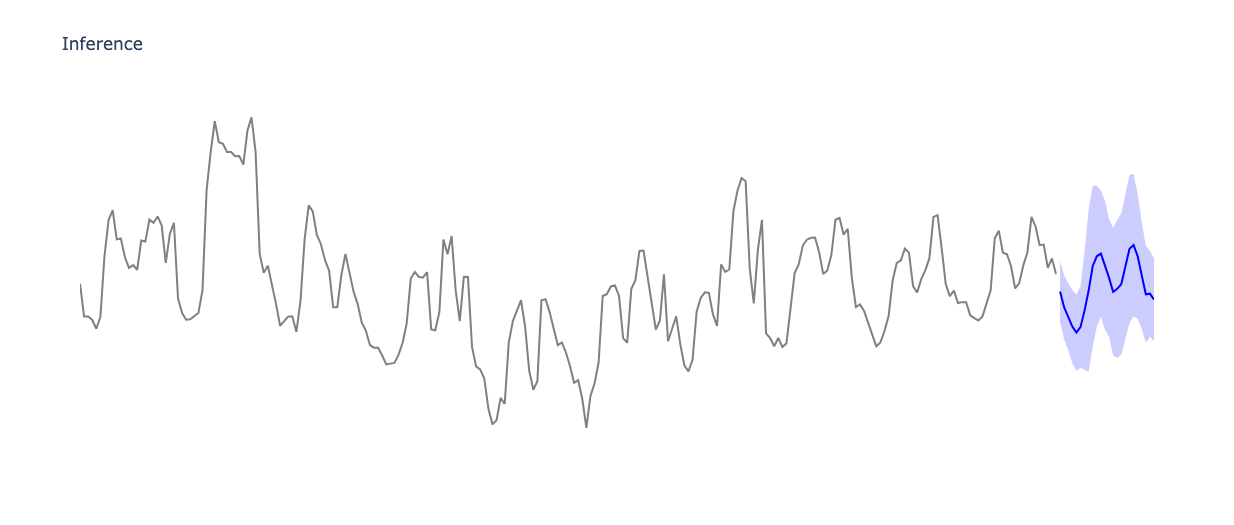
Analyzing sequential data often requires identifying anomalies or unexpected events that deviate from standard patterns. TimeGPT supports anomaly detection by monitoring data sequences (such as daily temperatures) for unusual fluctuations.
Detecting anomalies is crucial for timely responses. Sudden changes in market
behavior, unusual network activity, or abnormal sensor readings can all
indicate a need for prompt investigation.
For example, in finance, TimeGPT can highlight abrupt market changes; in cybersecurity, it helps uncover suspicious network activity. Anomaly detection enhances forecasting by flagging significant outliers, improving overall data insights.

## Multiple Series
TimeGPT provides robust support for multi-series forecasting, allowing simultaneous analysis of multiple time series. Users can train the model on many related series, improving accuracy and enabling more flexible customization for specific forecasting requirements.

## TimeGPT
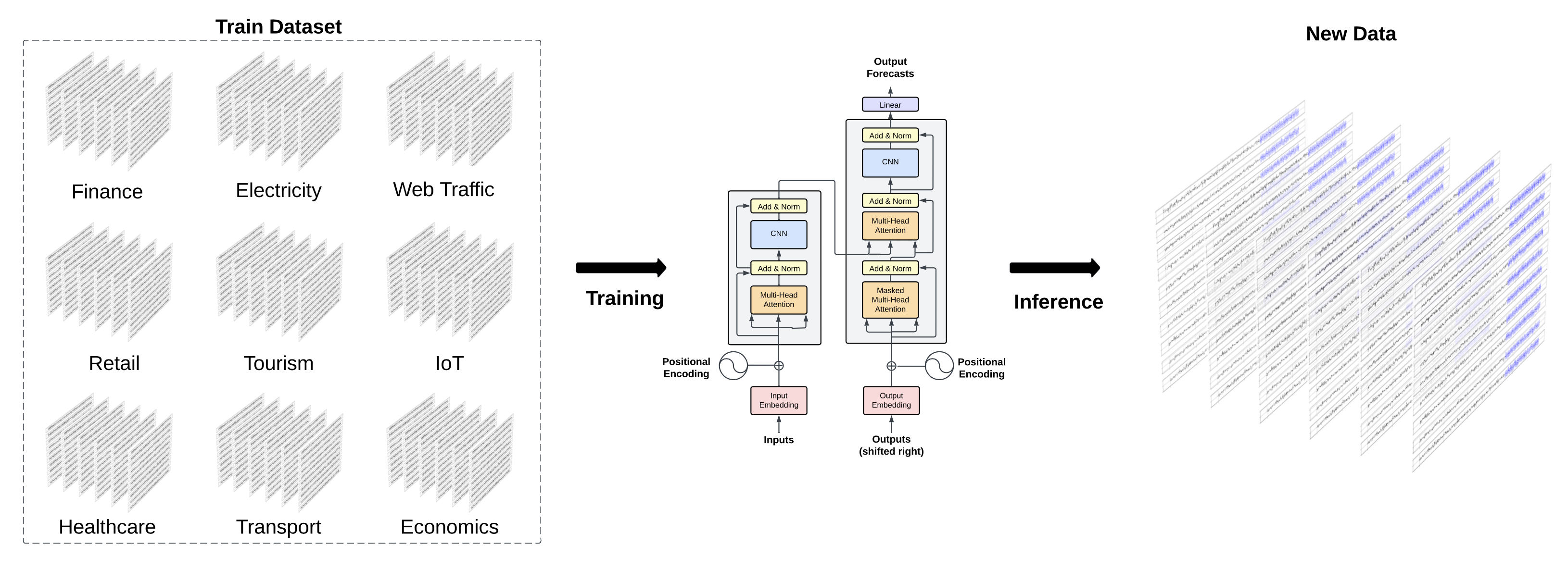
TimeGPT by Nixtla is a generative pre-trained model specifically designed for time series forecasting. It reviews historical series values (and optional exogenous variables) to generate predictions. Beyond forecasting, TimeGPT enables tasks like anomaly detection and financial forecasts.
TimeGPT scans time series data similarly to how a person might read text:
sequentially, from left to right. It can interpret historical windows (tokens)
and leverage temporal patterns learned from billions of data points.
With the TimeGPT API, you can access these forecasting capabilities for various potential use cases—from scenario planning to anomaly detection and beyond.
## Get Started with TimeGPT
Now that you understand the key concepts, you're ready to start using TimeGPT for your forecasting needs.
Learn more about TimeGPT and how it can transform your time series analysis.
Get up and running with TimeGPT in minutes with our step-by-step guide.