# Internlm-Xcomposer2 Best Practice
## Table of Contents
- [Environment Preparation](#environment-preparation)
- [Inference](#inference)
- [Fine-tuning](#fine-tuning)
- [Inference After Fine-tuning](#inference-after-fine-tuning)
## Environment Preparation
```shell
pip install 'ms-swift[llm]' -U
```
## Inference
Inference for [internlm-xcomposer2-7b-chat](https://modelscope.cn/models/Shanghai_AI_Laboratory/internlm-xcomposer2-7b/summary):
```shell
# Experimental environment: A10, 3090, V100, ...
# 21GB GPU memory
CUDA_VISIBLE_DEVICES=0 swift infer --model_type internlm-xcomposer2-7b-chat
```
Output: (supports passing local path or URL)
```python
"""
<<< Who are you?
I am your assistant, a language-based artificial intelligence model that can answer your questions.
--------------------------------------------------
<<< ![]() http://modelscope-open.oss-cn-hangzhou.aliyuncs.com/images/animal.png
http://modelscope-open.oss-cn-hangzhou.aliyuncs.com/images/animal.png![]() http://modelscope-open.oss-cn-hangzhou.aliyuncs.com/images/cat.pngWhat's the difference between these two images?
These two images are different. The first one is a picture of sheep, and the second one is a picture of a cat.
--------------------------------------------------
<<<
http://modelscope-open.oss-cn-hangzhou.aliyuncs.com/images/cat.pngWhat's the difference between these two images?
These two images are different. The first one is a picture of sheep, and the second one is a picture of a cat.
--------------------------------------------------
<<< ![]() http://modelscope-open.oss-cn-hangzhou.aliyuncs.com/images/animal.pngHow many sheep are there in the picture?
There are 4 sheep in the picture
--------------------------------------------------
<<<
http://modelscope-open.oss-cn-hangzhou.aliyuncs.com/images/animal.pngHow many sheep are there in the picture?
There are 4 sheep in the picture
--------------------------------------------------
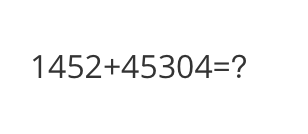
<<< ![]() http://modelscope-open.oss-cn-hangzhou.aliyuncs.com/images/math.pngWhat is the calculation result?
The calculation result is 1452+45304=46756
--------------------------------------------------
<<<
http://modelscope-open.oss-cn-hangzhou.aliyuncs.com/images/math.pngWhat is the calculation result?
The calculation result is 1452+45304=46756
--------------------------------------------------
<<< ![]() http://modelscope-open.oss-cn-hangzhou.aliyuncs.com/images/poem.pngWrite a poem based on the content in the picture
Ripples glisten on the lake's surface, a lone boat drifts.
On the boat, a light illuminates the night,
Speckles of stars reflected in the water.
In the distance, mountains shrouded in mist and clouds,
The starry night sky twinkling endlessly.
The lake is like a mirror, reflections clear,
The little boat passing through, like a poem, like a painting.
"""
```
Sample images are as follows:
cat:
http://modelscope-open.oss-cn-hangzhou.aliyuncs.com/images/poem.pngWrite a poem based on the content in the picture
Ripples glisten on the lake's surface, a lone boat drifts.
On the boat, a light illuminates the night,
Speckles of stars reflected in the water.
In the distance, mountains shrouded in mist and clouds,
The starry night sky twinkling endlessly.
The lake is like a mirror, reflections clear,
The little boat passing through, like a poem, like a painting.
"""
```
Sample images are as follows:
cat:
 animal:
 math:
math:
 poem:
poem:
 **Single Sample Inference**
```python
import os
os.environ['CUDA_VISIBLE_DEVICES'] = '0'
from swift.llm import (
get_model_tokenizer, get_template, inference, ModelType,
get_default_template_type, inference_stream
)
from swift.utils import seed_everything
import torch
model_type = ModelType.internlm_xcomposer2_7b_chat
template_type = get_default_template_type(model_type)
print(f'template_type: {template_type}')
model, tokenizer = get_model_tokenizer(model_type, torch.float16,
model_kwargs={'device_map': 'auto'})
model.generation_config.max_new_tokens = 256
template = get_template(template_type, tokenizer)
seed_everything(42)
query = """
**Single Sample Inference**
```python
import os
os.environ['CUDA_VISIBLE_DEVICES'] = '0'
from swift.llm import (
get_model_tokenizer, get_template, inference, ModelType,
get_default_template_type, inference_stream
)
from swift.utils import seed_everything
import torch
model_type = ModelType.internlm_xcomposer2_7b_chat
template_type = get_default_template_type(model_type)
print(f'template_type: {template_type}')
model, tokenizer = get_model_tokenizer(model_type, torch.float16,
model_kwargs={'device_map': 'auto'})
model.generation_config.max_new_tokens = 256
template = get_template(template_type, tokenizer)
seed_everything(42)
query = """![]() http://modelscope-open.oss-cn-hangzhou.aliyuncs.com/images/road.pngHow far is it to each city?"""
response, history = inference(model, template, query)
print(f'query: {query}')
print(f'response: {response}')
# Streaming
query = 'Which city is the farthest?'
gen = inference_stream(model, template, query, history)
print_idx = 0
print(f'query: {query}\nresponse: ', end='')
for response, history in gen:
delta = response[print_idx:]
print(delta, end='', flush=True)
print_idx = len(response)
print()
print(f'history: {history}')
"""
query:
http://modelscope-open.oss-cn-hangzhou.aliyuncs.com/images/road.pngHow far is it to each city?"""
response, history = inference(model, template, query)
print(f'query: {query}')
print(f'response: {response}')
# Streaming
query = 'Which city is the farthest?'
gen = inference_stream(model, template, query, history)
print_idx = 0
print(f'query: {query}\nresponse: ', end='')
for response, history in gen:
delta = response[print_idx:]
print(delta, end='', flush=True)
print_idx = len(response)
print()
print(f'history: {history}')
"""
query: ![]() http://modelscope-open.oss-cn-hangzhou.aliyuncs.com/images/road.pngHow far is it to each city?
response: The distance from Ma'anshan to Yangjiang is 62 kilometers, and the distance from Guangzhou to Guangzhou is 293 kilometers.
query: Which city is the farthest?
response: The farthest city is Guangzhou, with a distance of 293 kilometers from Guangzhou.
history: [['
http://modelscope-open.oss-cn-hangzhou.aliyuncs.com/images/road.pngHow far is it to each city?
response: The distance from Ma'anshan to Yangjiang is 62 kilometers, and the distance from Guangzhou to Guangzhou is 293 kilometers.
query: Which city is the farthest?
response: The farthest city is Guangzhou, with a distance of 293 kilometers from Guangzhou.
history: [['![]() http://modelscope-open.oss-cn-hangzhou.aliyuncs.com/images/road.pngHow far is it to each city?', ' The distance from Ma'anshan to Yangjiang is 62 kilometers, and the distance from Guangzhou to Guangzhou is 293 kilometers.'], ['Which city is the farthest?', ' The farthest city is Guangzhou, with a distance of 293 kilometers from Guangzhou.']]
"""
```
Sample image is as follows:
road:
http://modelscope-open.oss-cn-hangzhou.aliyuncs.com/images/road.pngHow far is it to each city?', ' The distance from Ma'anshan to Yangjiang is 62 kilometers, and the distance from Guangzhou to Guangzhou is 293 kilometers.'], ['Which city is the farthest?', ' The farthest city is Guangzhou, with a distance of 293 kilometers from Guangzhou.']]
"""
```
Sample image is as follows:
road:
 ## Fine-tuning
Fine-tuning of multimodal large models usually uses **custom datasets**. Here's a demo that can be run directly:
(By default, only the qkv part of the LLM is fine-tuned using Lora. `--lora_target_modules ALL` is not supported. Full-parameter fine-tuning is supported.)
```shell
# Experimental environment: A10, 3090, V100, ...
# 21GB GPU memory
CUDA_VISIBLE_DEVICES=0 swift sft \
--model_type internlm-xcomposer2-7b-chat \
--dataset coco-en-mini \
```
[Custom datasets](../LLM/Customization.md#-Recommended-Command-line-arguments) support json and jsonl formats. Here's an example of a custom dataset:
(Supports multi-turn conversations, each turn can contain multiple images or no images, supports passing local paths or URLs. This model does not support merge-lora)
```json
[
{"conversations": [
{"from": "user", "value": "
## Fine-tuning
Fine-tuning of multimodal large models usually uses **custom datasets**. Here's a demo that can be run directly:
(By default, only the qkv part of the LLM is fine-tuned using Lora. `--lora_target_modules ALL` is not supported. Full-parameter fine-tuning is supported.)
```shell
# Experimental environment: A10, 3090, V100, ...
# 21GB GPU memory
CUDA_VISIBLE_DEVICES=0 swift sft \
--model_type internlm-xcomposer2-7b-chat \
--dataset coco-en-mini \
```
[Custom datasets](../LLM/Customization.md#-Recommended-Command-line-arguments) support json and jsonl formats. Here's an example of a custom dataset:
(Supports multi-turn conversations, each turn can contain multiple images or no images, supports passing local paths or URLs. This model does not support merge-lora)
```json
[
{"conversations": [
{"from": "user", "value": "![]() img_path11111"},
{"from": "assistant", "value": "22222"}
]},
{"conversations": [
{"from": "user", "value": "
img_path11111"},
{"from": "assistant", "value": "22222"}
]},
{"conversations": [
{"from": "user", "value": "![]() img_path
img_path![]() img_path2
img_path2![]() img_path3aaaaa"},
{"from": "assistant", "value": "bbbbb"},
{"from": "user", "value": "
img_path3aaaaa"},
{"from": "assistant", "value": "bbbbb"},
{"from": "user", "value": "![]() img_pathccccc"},
{"from": "assistant", "value": "ddddd"}
]},
{"conversations": [
{"from": "user", "value": "AAAAA"},
{"from": "assistant", "value": "BBBBB"},
{"from": "user", "value": "CCCCC"},
{"from": "assistant", "value": "DDDDD"}
]}
]
```
## Inference After Fine-tuning
```shell
CUDA_VISIBLE_DEVICES=0 swift infer \
--ckpt_dir output/internlm-xcomposer2-7b-chat/vx-xxx/checkpoint-xxx \
--load_dataset_config true \
```
img_pathccccc"},
{"from": "assistant", "value": "ddddd"}
]},
{"conversations": [
{"from": "user", "value": "AAAAA"},
{"from": "assistant", "value": "BBBBB"},
{"from": "user", "value": "CCCCC"},
{"from": "assistant", "value": "DDDDD"}
]}
]
```
## Inference After Fine-tuning
```shell
CUDA_VISIBLE_DEVICES=0 swift infer \
--ckpt_dir output/internlm-xcomposer2-7b-chat/vx-xxx/checkpoint-xxx \
--load_dataset_config true \
```