# GLM-4-9b
## 论文
`GLM: General Language Model Pretraining with Autoregressive Blank Infilling`
- https://arxiv.org/abs/2103.10360
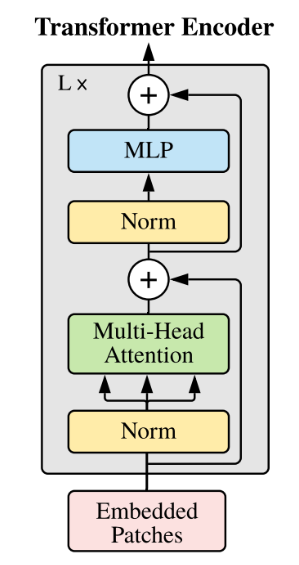
## 模型结构
## 算法原理
## 环境配置
-v 路径、docker_name和imageID根据实际情况修改
### Docker(方法一)
```bash
docker pull image.sourcefind.cn:5000/dcu/admin/base/pytorch:2.1.0-centos7.6-dtk24.04-py310
docker run -it --network=host --privileged=true --name=docker_name --device=/dev/kfd --device=/dev/dri --ipc=host --shm-size=32G --group-add video --cap-add=SYS_PTRACE --security-opt seccomp=unconfined -u root -v /path/your_code_data/:/path/your_code_data/ -v /opt/hyhal/:/opt/hyhal/:ro imageID /bin/bash
cd /your_code_path/glm4-9b_pytorch
cd basic_demo
pip install -r requirements.txt
```
### Dockerfile(方法二)
```bash
cd ./docker
docker build --no-cache -t glm4-9b:latest .
docker run -it --network=host --privileged=true --name=docker_name --device=/dev/kfd --device=/dev/dri --ipc=host --shm-size=32G --group-add video --cap-add=SYS_PTRACE --security-opt seccomp=unconfined -u root -v /path/your_code_data/:/path/your_code_data/ -v /opt/hyhal/:/opt/hyhal/:ro imageID /bin/bash
cd /your_code_path/glm4-9b_pytorch
cd basic_demo
pip install -r requirements.txt
```
### Anaconda(方法三)
1、关于本项目DCU显卡所需的特殊深度学习库可从光合开发者社区下载安装: https://developer.hpccube.com/tool/
```bash
DTK软件栈:dtk24.04
python:python3.10
torch:2.1
deepspeed: 0.12.3+gita724046.abi0.dtk2404.torch2.1.0
```
Tips:以上dtk软件栈、python、torch等DCU相关工具版本需要严格一一对应
2、其他非特殊库直接按照下面步骤进行安装
```bash
cd basic_demo
pip install deepspeed-0.12.3+das1.0+gita724046.abi0.dtk2404.torch2.1.0-cp310-cp310-manylinux2014_x86_64.whl
pip install -r requirements.txt
```
## 数据集
### 准备数据集
对于数据文件,样例采用如下格式。这里是一个不带有工具的例子:
```
{"messages": [{"role": "user", "content": "类型#裤*材质#牛仔布*风格#性感"}, {"role": "assistant", "content": "3x1的这款牛仔裤采用浅白的牛仔面料为裤身材质,其柔然的手感和细腻的质地,在穿着舒适的同时,透露着清纯甜美的个性气质。除此之外,流畅的裤身剪裁将性感的腿部曲线彰显的淋漓尽致,不失为一款随性出街的必备单品。"}]}
```
这是一个带有工具调用的例子:
```
{"messages": [{"role": "system", "content": "", "tools": [{"type": "function", "function": {"name": "get_recommended_books", "description": "Get recommended books based on user's interests", "parameters": {"type": "object", "properties": {"interests": {"type": "array", "items": {"type": "string"}, "description": "The interests to recommend books for"}}, "required": ["interests"]}}}]}, {"role": "user", "content": "Hi, I am looking for some book recommendations. I am interested in history and science fiction."}, {"role": "assistant", "content": "{\"name\": \"get_recommended_books\", \"arguments\": {\"interests\": [\"history\", \"science fiction\"]}}"}, {"role": "observation", "content": "{\"books\": [\"Sapiens: A Brief History of Humankind by Yuval Noah Harari\", \"A Brief History of Time by Stephen Hawking\", \"Dune by Frank Herbert\", \"The Martian by Andy Weir\"]}"}, {"role": "assistant", "content": "Based on your interests in history and science fiction, I would recommend the following books: \"Sapiens: A Brief History of Humankind\" by Yuval Noah Harari, \"A Brief History of Time\" by Stephen Hawking, \"Dune\" by Frank Herbert, and \"The Martian\" by Andy Weir."}]}
```
- `system` 角色为可选角色,但若存在 `system` 角色,其必须出现在 `user`
角色之前,且一个完整的对话数据(无论单轮或者多轮对话)只能出现一次 `system` 角色。
- `tools` 字段为可选字段,若存在 `tools` 字段,其必须出现在 `system`
角色之后,且一个完整的对话数据(无论单轮或者多轮对话)只能出现一次 `tools` 字段。当 `tools` 字段存在时,`system`
角色必须存在并且 `content` 字段为空。
## 训练
1. 进入`finetune_demo`目录下,执行:
```bash
pip install -r requirements.txt
```
2. 配置文件位于configs目录下,包括以下文件:
- `deepspeed配置文件`:[ds_zereo_2](./finetune_demo/configs/ds_zereo_2.json),[ds_zereo_3](./finetune_demo/configs/ds_zereo_3.json)
- `lora.yaml/ ptuning_v2.yaml / sft.yaml`: 模型不同方式的配置文件,包括模型参数、优化器参数、训练参数等。部分重要参数解释如下:
+ data_config 部分
+ train_file: 训练数据集的文件路径。
+ val_file: 验证数据集的文件路径。
+ test_file: 测试数据集的文件路径。
+ num_proc: 在加载数据时使用的进程数量。
+ max_input_length: 输入序列的最大长度。
+ max_output_length: 输出序列的最大长度。
+ training_args 部分
+ output_dir: 用于保存模型和其他输出的目录。
+ max_steps: 训练的最大步数。
+ per_device_train_batch_size: 每个设备(如 GPU)的训练批次大小。
+ dataloader_num_workers: 加载数据时使用的工作线程数量。
+ remove_unused_columns: 是否移除数据中未使用的列。
+ save_strategy: 模型保存策略(例如,每隔多少步保存一次)。
+ save_steps: 每隔多少步保存一次模型。
+ log_level: 日志级别(如 info)。
+ logging_strategy: 日志记录策略。
+ logging_steps: 每隔多少步记录一次日志。
+ per_device_eval_batch_size: 每个设备的评估批次大小。
+ evaluation_strategy: 评估策略(例如,每隔多少步进行一次评估)。
+ eval_steps: 每隔多少步进行一次评估。
+ predict_with_generate: 是否使用生成模式进行预测。
+ generation_config 部分
+ max_new_tokens: 生成的最大新 token 数量。
+ peft_config 部分
+ peft_type: 使用的参数有效调整类型 (支持 LORA 和 PREFIX_TUNING)。
+ task_type: 任务类型,这里是因果语言模型 (不要改动)。
+ Lora 参数:
+ r: LoRA 的秩。
+ lora_alpha: LoRA 的缩放因子。
+ lora_dropout: 在 LoRA 层使用的 dropout 概率。
+ P-TuningV2 参数:
+ num_virtual_tokens: 虚拟 token 的数量。
+ num_attention_heads: 2: P-TuningV2 的注意力头数(不要改动)。
+ token_dim: 256: P-TuningV2 的 token 维度(不要改动)。
### 单机单卡
```shell
python finetune_hf.py data/AdvertiseGen/ THUDM/glm-4-9b-chat configs/lora.yaml
```
### 单机多卡/多机多卡
这是使用 `deepspeed` 作为加速方案的,您需要安装 `deepspeed`。
```shell
OMP_NUM_THREADS=1 torchrun --standalone --nnodes=1 --nproc_per_node=8 finetune_hf.py data/AdvertiseGen/ THUDM/glm-4-9b configs/lora.yaml
```
### 从保存点进行微调
如果按照上述方式进行训练,每次微调都会从头开始,如果你想从训练一半的模型开始微调,你可以加入第四个参数,这个参数有两种传入方式:
1. `yes`, 自动从最后一个保存的 Checkpoint开始训练
2. `XX`, 断点号数字 例 `600` 则从序号600 Checkpoint开始训练
例如,这就是一个从最后一个保存点继续微调的示例代码
```shell
python finetune_hf.py data/AdvertiseGen/ THUDM/glm-4-9b-chat configs/lora.yaml yes
```
## 推理
进入[basic_demo](./basic_demo/)目录下
### 快速调用
```
python inference.py
```
### 使用命令行与 GLM-4-9B 模型进行对话
```
python trans_cli_demo.py # GLM-4-9B-Chat
python trans_cli_vision_demo.py # GLM-4V-9B
```
### 使用 Gradio 网页端与 GLM-4-9B-Chat 模型进行对话
```
python trans_web_demo.py
```
### 使用 Batch 推理
```
python cli_batch_request_demo.py
```
## result
### 精度
暂无
## 应用场景
### 算法类别
多轮对话
### 热点应用行业
家居,教育,科研
## 源码仓库及问题反馈
- https://developer.hpccube.com/codes/modelzoo/glm4-9b_pytorch
## 参考资料
- https://github.com/THUDM/GLM-4